Showing posts with label Hanoi. Show all posts

2016-01-24

Vietnam the beautiful wonder of Asia

The countrymen call their motherland “The Land of Dragons.” Vietnam is a land of history filled with memory of many told and untold events. The great theme of modern Vietnamese history is the Vietnam’s war of Independence and reunification.
The Vietnam War was proved to be an extremely sobering experience which caused so much suffering for the Vietnamese people. The people of the country have a well-deserved reputation for being hard workers, but they enjoy their leisure as much as anyone else. Today the largely agrarian society of the country is shifting towards a more multi-sector economy. The country has a population of 91.5 million (estimates 2011) with a wealth of dialects spoken in different regions.
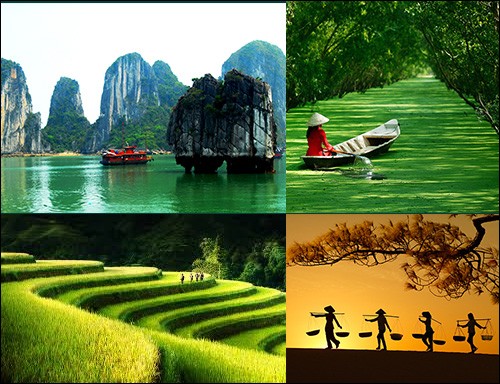
vn
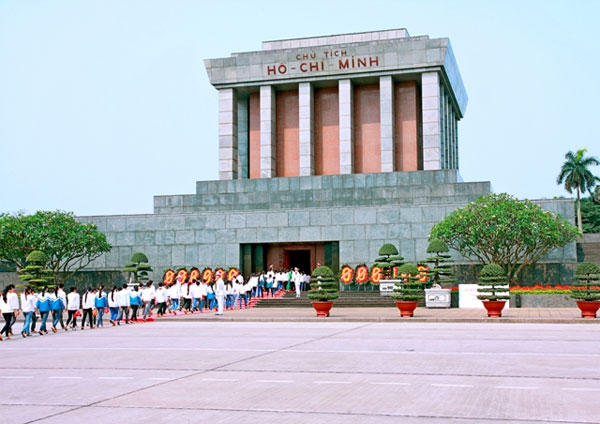
President Ho Chi Minh’s name comes to mind when we remember the recent history of Vietnam. He is the best-loved and famous political figure in the country. Ho Chi Minh the founder of the Vietnamese Communist Party and leader of the revolution carried the torch of Vietnam’s independence movement for over half a century. As a revolutionist he made great contribution to the victorious Viet Minh that unified the country. Mausoleum Ho Chi Minh a monumental marble edifice at Ba Dinh Square in Hanoi was built to show the deep gratitude of the countrymen to their great leader. His remains are displayed inside the chamber of the mausoleum.
Hanoi the capital city, known as “city of lakes” is one destination for which any number of praising words seems inadequate. It is a thriving metropolis with cloud-tickling skyscrapers, numerous specialty shops, boutiques and colorful markets that unhesitatingly leap into the future.
amitysmiletravel-hn12
                                                     Ho Chi Minh Mausoleum
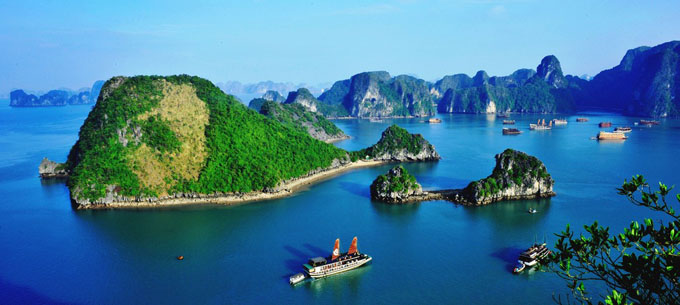
A visit to the country would remain incomplete if one doesn’t drive a 3½-hour journey on road from Hanoi to Halong Bay port. The five hour cruise in a double deck wooden boat on the bluish green waters, one can enjoy the beauty of the bay. The UNESCO world Heritage site Halong (or "Descending Dragon) Bay is situated amidst a splendid panorama. The bay covers an area of 1500-square-kilometres dotted with a cluster of 1960 lime stone islands.
amitysmiletravel-hl10
                                                                   Ha Long Bay 
Hue in the center of the country is studded with many archeological sites. There is no end to the breath-taking sites visitors can see in Hue. Among those sites, feudal capital city with fortresses, temples, mausoleums, pagodas, bridges attract thousands daily. The area also offers the tourist to enjoy the riverside beauty. The Perfume River is famed for breathtaking river cruise in a traditional wooden boat.
Traveling from North to South of Vietnam can be a fantastic experience for a tourist.
Ho Chi Minh City is the largest city in Vietnam and is situated nearly 1,700 kilometers south of Hanoi. After the end of war in 1975 the Saigon city was renamed Ho Chi Minh City in honor of this great Leader. It is a city with a rapid development, where modern buildings are rising besides the 19th century buildings. An array of giant cranes show the development fever in the city.
Among its highest-esteemed attractions are the Notre Dame Cathedral, Municipal Theater, the Re-unification palace, the Mekong River cruise, the Cu Chi tunnels and the Vietnam War Memorial Museum. The Vietnam War memorial museum is one of the most recognizable places to visit in the city. It is a living testimony to the history of the Vietnam’s war of independence and re-unification of North and South Vietnam. It is a place preserving the memories and relics of the Vietnam war.
Vietnam culture possesses several distinctive characteristics that give its own unique style. Today, the mixture of influences is apparent in art, music, dance and literature. Moreover, the fast growing tourism sector is another major pillar in the overall economic field of the country Vietnam is emerging as a strong tourist destination with number of visitors to the country climbing to 6.0 million in 2011.
Traveling to the country can be done in different ways. However the experience that a visitor gains is unforgettable. The country is home to a wide range of domestic and international airports. Hanoi’s Noi Bai Airport, Da Nang and Tan Son Nhat Airport of Ho Chi Minh City are the major stop over points for many international airlines. Vietnam has a great deal to offer and is worth visiting.

2016-01-13

10 Things you should know before travelling to Viet Nam by yourself

1. The facilities are good, use them

Before I got to Vietnam I had visions of squat toilets all over the country, like that of many other South East Asian destinations and so steeled myself for having to ‘hover’ on a regular basis.

This turned out to be a misconception and the only squat toilet I encountered was at a service station at the side of the road. Apart from this, the plumbing tends to work in much a similar way to Greece: don’t block the pipes by flushing the toilet paper down; instead use the bin provided and everything will be fine.

As with anywhere in Asia, arm yourself with plenty of tissues and antibacterial gel in case you’re caught short with no supplies. You may also be charged to use toilets if they are situated at popular tourist sites. Don’t be cheap and think you can get away with paying the minimum price unless you are male and are used to using public urinals. I made this mistake and was shown to an exposed toilet bowl with no door that could be seen from the street!

2. It WILL rain – there’s no best time to visit Vietnam

If you are travelling from one end of the country to the other, it will rain at some point during your trip. The seasons vary throughout the country and I encountered rain in both Hoi An and Hue. Even though it was still warm, the rain was heavy at times, but don’t let it dampen your fun.

Ponchos can be bought for a minimal price when you are there (the thinner plastic ones are good just for walking around whereas you should invest in the thicker, longer ones if you’re planning on riding motorbikes and cycles a lot).

Also, don’t bother packing an umbrella – it just adds to your baggage weight and even the lowest class of hotels tend to offer them free in the rooms. Note –  Make sure you return the umbrellas before you leave as you will be charged for them otherwise.

3. The trains never run on time

Once you’ve spent a few days in Vietnam you’ll realise that the Vietnamese are a laid-back people, who are never in a rush to get anywhere. This translates to their public transport system also.

Having used a few sleeper trains during my stay, it became custom to never expect to arrive at your destination at the intended time, even if you had set off within an hour of your departure time. Just go with the flow and be ready and alert to leave the train at your station when you arrive because they don’t hang around for long and you never know where you might end up if you have to stay on the train until the next stop.

4. A Halong Bay cruise is a highlight – don’t miss it out


Although Halong Bay is often criticised as being quite touristy these days, it is still a beautiful place and needs to be experienced at least once. Invest in a good tour with a decent boat and you’ll be guaranteed a delicious lunch, too.

5. The traffic is crazy

There’s no getting away from it – you will have to brave the oncoming traffic in Vietnam at some point, but it really isn’t as bad as you would expect.

6. The Great Firewall of Vietnam

Despite being impressed by the availability and speed of the free WiFi in Vietnam, there was one problem that kept occurring – in many hotels and hostels Facebook is blocked by the internal servers, meaning that access is impossible.

When you’re travelling, Facebook is sometimes your only means of communication with other travellers you have met or are planning to meet, as well as keeping in touch with friends and family back home, and so this can be frustrating.

I also found that I couldn’t even access the Facebook app on my phone in these places. Try typing the address for the beta version of Facebook into the browser and this often solves the problem, but do make sure to ask the front desk about this access issue as well, as sometimes they may not even be aware of the problem.

7. Don’t always follow the guidebook recommendations

One night in Saigon we followed our trusted guidebook to a recommended bar that sounded right up our street. After we had spent half an hour walking around and having to ask a couple of locals, we actually managed to find the place, only to discover that it was the Vietnamese version of Hooters and was full of expat males (being the only female at the bar was a bit strange, to say the least).

Even my male companions were freaked out by the ambience of this bar and we drank our beers and quickly left. Don’t always trust the guidebooks – sometimes they become out of date as soon as they are published and sometimes they’re just plain wrong.

8. ‘Karaoke Massage’ ISN’T a beauty parlour with microphones

This may sound like an obvious one, but the naïve travellers among us may still fall into the trap of believing that these establishments are harmless and non-brothel-like. The word karaoke is used to attract tourists’ attention and to get them in, and then once you’re in….who knows??

9. Pho is pronounced ‘fur’ or ‘fuh’

The most mispronounced word by travellers is the country’s national dish of noodle soup.


I have heard it called “fo”, “po” and countless other variations, yet I was advised by a local that you need to be careful what it is you are asking for exactly when you pronounce this word. The word sounded as “fo” in Vietnamese actually means “lady of the night”, so you could end up getting much more than beef noodle soup!

10. Try all of the local beers

Each town in Vietnam has its own brand of beer which is brewed locally and is often cheaper than the country’s other beers (and cheaper than the imports).

It was great fun to try each of them and see what the label designs were like and how the taste differed (although after a few who can tell?). And you must try Bia Hoi at a streetside café in Hanoi….I know sitting in a child’s chair at the side of the kerb seems insane, but hey, you’re in Vietnam! Just go with it!

2016-01-11

12 hidden gems of Vietnam tourist attraction


Vietnam is the top destination in Asia tourist attraction. Popular tourist destinations include Hanoi, Sapa, the former imperial capital of Hué, the World Heritage Sites of Phong Nha-Kẻ Bàng National Park, Hội An and Mỹ Sơn, coastal regions such as Nha Trang, the caves of Hạ Long Bay and the Marble Mountains.

1, Hanoi
Hanoi can charm you so effortlessly with its poetic and romantic feel, especially in autumn. It must be the reason why there are so many beautiful songs and poems written about the capital. This city is a must-go destination if you want to discover Vietnam’s historic and cultural delights. Take time to enjoy the unique blend of colonial and pre-colonial architecture, historical and cultural museums, local shows, concerts and various temples and pagodas.


While in Hanoi, try to explore as much exotic local cuisine as possible but be sure not to miss the delicious and authentic Pho, which is every local’s staple dish. Also don’t miss the unique and surprisingly pleasant tasting “egg coffee” – one of the 10 best drinks in the world. After that feast of flavors, you are ready to engross in the fascinating maze of streets in the Old Quarter – the heart of Hanoi.
In the heart of the capital city of Hanoi the One Pillar Pagoda was built in 1049 to resemble one seen in Emperor LyThai Tong’s dream, this dream like Buddhist temple appears to float above a lotus pond. It is built of wood and stands on a small single pillar, the temple is designed to look like a lotus blossom and has ornate beautifully painted carvings. The One Pillar Pagoda we see today is a reconstruction of the original which was destroyed in war.

2, Halong bay
Halong within the still waters rise up out of the water 3000 island limestone formations in all manner of shapes and sizes. The water is often covered in mist giving it an eerie atmosphere. The Karst limestone formations can be seen by taking a cruise in a traditional wooden junk, you can also canoe or swim here. There are some beautiful caves in the small islands which are lit making the area even more mysterious.

3, Sapa
Sapa is one of the most breathtaking hill stations in Vietnam which reflects the signature of French architecture and colorful hill tribal cultures. This is home to stunning mountain landscapes, verdant rice terraces, unique stilt villages and Indochina peak, the Fansipan. Travellers are invited to enjoy the best of Sapa all the year round with different taste of seasons and exciting outdoors.

4, Hue
What makes Hue one of the best places to visit in Vietnam probably is its special look and feel. This ancient capital of Vietnam is the home of the emperor’s residence. The glorious time of Nguyen Dynasty is still impressively reflected today, in its culture, architecture and cuisine.
Hue is well known for delicate royal cuisines and the gentlest ladies in the country. Beautiful slim girls in traditional Ao dai riding bicycles along the Perfume river is the signature image of this city. If you are fascinated by historical and cultural discovery, the city is perfectly filled with palaces, royal tombs, pagodas and temples to explore and admire. And don’t leave Hue before you taste Bun bo Hue (beef noodle soup), Com la sen (rice with lotus seeds in lotus leaf) and various yummy rice cakes. Hue is famous in the country as the place that boasts the largest collection of various rice cakes. If you have some extra time to spare, explore an off the beaten track place not too far from Hue – Lang Co. It is a beautiful tranquil beach village.


Once the hub of the Nguyen Dynasty the tranquil collection of temples, ceremonial gates, streams, moats, pavilions, bridges, gardens and pagodas make this a beautiful site with plenty to see. The Thai Hoa Palaces and the Truong Sanh Residence are two of the most beautiful structures here as well as the ornate Thien Mu Pagoda isolated over the river. The beautiful city displays the essences of Vietnamese artistry.
The tombs are not far from Hue and are spread out along the banks of the Perfume River. It’s one of the most popular places to visit in Vietnam and I personally think the most beautiful of the tombs are Minh Mang, Khai Dinh, Tu Doc, Thieu Tri and Dong Kanh. The tombs were built according to religious outlines including symmetrically balanced geometrical angles and symbolic motifs. Each tomb has its own character with surrounding gardens, small bridges and walkways. In the Khai Dinh tomb you can see intricate ceramic and glass work and it is perhaps the most beautiful of the tombs.

This nature reserve is recognized by UNESCO and is the location of Son Dong, the largest cave in the world as well as another 300 caves and grottos. Within Son Dong is a 13 meter long underground river and beautiful stalactite and stalagmite formations. Other significant and beautiful caves in the park include Tien Son Cave, Thien Duong Cave and the Von cave system. The unusual and beautiful rock formations are due to the area being in a 2000km square limestone zone. Enjoy the tropical vegetation and evergreen forests with 500 year old trees.

6, Hoi An
Dating back over 2000 years, little alluring Hoi An is a dreamland for those who wish to have an ancient town experience. Walking around its atmospheric Old Town’s winding lanes is one of the best ways to immerse yourself in the blend of Cham, Chinese and Vietnamese architecture and culture.
Filled with charming shops, traditional wooden houses, flower garlands and lanterns, this town boasts an elegant beauty and was voted one of the best cities in the world. Many consider it to be Vietnam’s culinary capital for its famous Cao Lau, various tasty street foods and plenty of cooking courses.
Lavish forested hills, rice paddle fields and fishing villages are just a bit outside the town waiting for you to discover. Also, golden sandy beaches in Cua Dai, An Bang and China Beach are not to be missed while you are here in Hoi An

7, Nha Trang
This favorite spot of “sun and fun” seekers is located on one of the most beautiful bays in Asia. Adorned with lush islands, beautiful turquoise coastline and colorful coral reefs, Nha Trang is a great fun place for various water sports and outdoor activities.
Want to enjoy Nha Trang the local way? Sail to the ocean, catch fish, grill and enjoy them on board!
Here is a challenge for foodies, find the most special dish: Bo La (stewed beef in 5 spices over a sun dried egg served with Vietnamese baguette). It’s an amazing mix between French and local tastes. You can be very proud of yourself if you can have this delicious dish, not only because of the taste, but also because this rare dish is mostly unknown, even by the locals. A feast of fresh seafood cooked in spectacular local recipes is another must while you are here.
A bit further out from town, Cam Ranh Bay – one of the world’s finest deep-water harbors, is a hidden gem that is worth the 40 kilometers drive. And if you want to add a touch of romance to the trip, spend a night at Ninh Van Bay. It’s a golden sand paradise for honeymooners set along the bay with beautiful green hills.

8, Phu Quoc island
This tropical paradise is a perfect destination if you long for some peace and romance. Floating aimlessly in crystal clear lukewarm waters of the Gulf of Thailand is just the best way to calm your mind and ease your body. Walking barefoot on silk-soft white sands and emerald green waters or simply lying back in a hammock with a good book, are other great ways to immerse yourself in this beautiful and untouched marine environment.
PhuQuoc is as peaceful as it gets, and yet, this astonishing island is full of entertainment that will delight your adventurous side. Beach sports and water activities here are fantastic. Check out jet skiing, wind sailing, fishing, scuba diving and snorkeling. For more daring souls, don’t miss the chance to experience squid fishing. And when the night falls, the seafood night market is a must-go. Steamed wild fish and many local specialties found here definitely offer you a feast of heaven on earth.
Ladies, while here, check out the famous pearl farm. Properly adorned with the local accouterments, you will look so stunning after a wonderful trip to Phu Quoc.
The beautiful beaches of Vietnam deserve a place on this list. A few years ago Nha Trang was one of the most popular beaches in the country, but for a more pristine and tourist free beach try Phu Quoc Island. Apart from the dense inland forests the coast of Phu Quoc has long stretches of white sandy beaches and translucent water. The beauty continues under the water in the surrounding coral reefs. The 99 Peaks mountain range covered with unique plants, trees, waterfalls and inhabited by seldom seen indigenous animals are the best place to see the island from.

9, Saigon, Ho Chi Minh city
What makes Saigon so irresistible is its essential vitality. As the biggest commercial hub of Vietnam, Ho Chi Minh City has a special vibe that pulsates and refuses to rest. Thanks to its complex blend of different cultures, historical traits and Western influences, the city offers a mix of architecture, culture and street life that will at times fascinate and at other times thrill. While in Saigon, make sure you explore the Vietnamese coffee culture and experience the exciting nightlife, with plenty of street restaurants where you can have fruit, ice-cream, barbeque and hotpot, all late at night when the local Vietnamese finish their work and populate the lively streets.
In Ho Chi Minh City there are great opportunities to immerse yourself in the kitchens of Vietnam, with a wide range of cuisines that come from all over-the-country. Also, don’t miss the chance to enjoy the very affordable-luxuries you can’t find at home, such as romantic dining on a boat, healing therapy massage, a feast of fresh seafood, tailor-made suits and many other nice treats at surprisingly good prices.

10,Mekong Dalta
MekongDelta – the “Rice bowl of Vietnam” is a land of enchanting floating markets, lush green rice fields, bird sanctuaries, fascinating villages and endless fruit gardens. A typical one-day trip from Ho Chi Minh City is not merely enough for you to explore the most fertile region of the country. There is no place else in Vietnam where you can enjoy such an abundance of fruit, vegetables and river fish of all kinds. There is an endless list of treats to sample the local taste, but do your best to try the fish hotpot, grilled snails in black pepper sauce and the famous Ben Tre coconut.
If you have a chance to stay with a local family then don’t be surprised (and shouldn't refuse) when the host just gets everything they can find in the house (or in the market) to treat you to a proper feast. Warm and sincere hospitality is the core nature of Mekong people. Pamper yourself with cruising the delta at dusk, dining with grilled fish and enjoying a refreshing beverage while watching the sunset - it’s about as good as it gets.
The fertile land around the delta has allowed plant life to run wild, apart from the agricultural opportunities the delta offers untouched nature reserves. Explore the river life of floating markets and small villages as well as the islands close to the delta mouth. The beautiful landscape includes rice paddies, small rivulets and water channels meandering through the countryside towards the sea.

11, Street foods
  A collection of the best and most delicious recipes from the streets of Vietnam. Stepping onto the streets of Vietnam is like entering a big, bustling kitchen - everywhere, something is being rolled, boiled, steamed, or fried; pots of hot, fragrant pho sit over coal burners and balls of peanut-studded sticky rice are steamed and wrapped in newspaper. The food is fast, fresh, fragrant, and second to none in terms of its diversity and availability. Vietnamese Street Food represents everything enticing there is to eat on the streets of Vietnam. It contains more than sixty well-loved and authentic recipes from Prawn and Rice Paper Rolls to Crab Wontons, from Classic Noodle Soup with Chicken to Salt and Pepper Squid, and Crunchy Baguettes Filled with Skewers of Lemongrass Beef. Alongside these recipes are the stories of people who run some of the most legendary street stalls, providing a glimpse into their lives and daily routines. The variety of dishes and cooking methods, be it rolled, boiled, steamed, or fried, combined with gorgeous photographs of every dishful will have you creating unpretentious, fresh, and flavorsome food for any occasion.

12, Nigh market
When coming to a certain region of Vietnam, you will surely want to visit the night markets, the most prominent landmarks where culture and food exchange... of those areas. Some night markets that can not be ignored in all parts of the country such as: Night Market in Old Quarter in Hanoi, Hoi An Night Market in Quang Nam, Nha Trang night market, Ben Thanh night market in Ho Chi Minh...

2016-01-10

Top ten tourist attractions in Vietnam by Amity Smile Travel

Vietnam however is also a country with a long history and ancient traditions. It has many historic attractions and old temples.
Following is an overview of the most amazing tourist attractions in Vietnam by amitysmiletravel.com, a travel list website that features the most amazing sights around the world divided into various “best of” lists.
1. Ha Long Bay

Ha Long Bay is situated in north Vietnam round a 120km-long coast line and is literally translated as “Bay of Descending Dragons”. The top tourist attraction in Vietnam, Ha Long Bay features thousands of islands, each topped with thick jungle vegetation, forming a spectacular seascape of limestone pillars. Several of the islands are hollow, with enormous caves, others islands include lakes and some support floating villages of fishermen.
2. Thien Mu Pagoda (Hue)
With seven stories, the Thien Mu Pagoda in Hue is the tallest pagoda in Vietnam. The pagoda overlooks the Perfume River and is regarded as the unofficial symbol of the former imperial capital. The temple was built in 1601 during the rule of the Nguyễn Lords. The initial temple was very simply constructed, but over time it was redeveloped and expanded with more intricate features.
3. Hoan Kiem Lake (Hanoi)

Located in the historical heart of Hanoi, Hoan Kiem Lake is one of the major scenic spots in the city and serves as the locals’ favourite leisure spot. Hoan Kiem means “returned sword”, and the name comes from a legend in which King Le Loi was given a magical sword by the gods, which he used to drive out the invading Chinese. Later he returned the sword to the Golden Turtle God in the lake.
4. Hoi An

This fishing-village-turned tourist attraction is situated on the coast of the East Sea. Hoi An has been an international port from the 16th century although the serious shipping business has long since moved to the city of Da Nang. The heart of the city is still the Old Town, full of winding lanes and Chinese-styled shops. It is sometimes called the “Venice of Vietnam” because of the narrow canals that cut through part of the town.
5. Phu Quoc Island
Located in front of the Cambodia coast, Phu Quoc is the largest island in Vietnam. Phu Quoc is what Phuket would be if it hadn’t been overrun by development. The island features pristine tropical forests, undamaged coral reefs and great beaches. One of its beaches, named Bai Dai (Long Beach), was chosen by the ABC News as one of five beautiful and clean beaches. Phu Quoc is famous for producing the best nuoc mam or fermented fish sauce in the world.
6. Sa Pa Terraces

Sa Pa is a town in northwest Vietnam not far from the Chinese border. Rice terraces can be found in the Muong Hoa valley between Sa Pa town and the Fansipan Mountain, on a backdrop of thick bamboo woodlands. Local mountain people, the Hmong, Giay, Dao, Tay, and Giay, grow rice on these paddy terraces, along with vegetables.
7. Mui Ne
The formerly little-inhabited beach south of the fishing village of Mui Ne has seen some serious development in the last 15 years. Due to strong sea breezes it is a popular destination in Vietnam for kite and windsurfing. No trip to Mui Ne is complete without a trip to the famous sand dunes located a short distance north of the town. The vast sandy expanse provide some great panoramic views especially during sunset.
8. Mekong Delta
The Mekong Delta is the region in southern Vietnam where the river approaches and empties into the sea. It is a very rich and lush area, covered with rice fields, that produces about half of the total of Vietnam’s agricultural output. Subsequently, life in the Mekong Delta revolves much around the river, and all the villages are often accessible by river rather than by road.
9. Cu Chi Tunnels
The Cu Chi Tunnels are an immense network of connecting underground tunnels located about 70km northwest of Ho Chi Minh City centre. The tunnels, measuring 200km in total length, were used by liberation soldiers as hiding spots during the Vietnam War, and were the base of operations for the Tet Offensive in 1968. The tunnels have become a popular tourist attraction, and visitors are invited to crawl around in the safer parts of the tunnel system.
10. Nha Trang

Nha Trang is Vietnam’s most popular seaside resort town located along the second most beautiful bays in the country. It features beautiful beaches with fine and clean sand and clear ocean water with mild temperatures. The city has about 300,000 inhabitants and is more lively and urban in character than other beach destinations like Mui Ne and Phu Quoc. It’s also a major scuba diving centre of Vietnam.

2016-01-09

Vietnamese banh mi is the world's best sandwich, do you know ?

A product of Vietnam’s colonial past, the beloved concoction combines a crunchy French baguette with pork, pate and an ever-changing array of fresh vegetables.
The cab driver stopped on the bustling boulevard Pho Hue and pointed at a mishmash of incongruent four and five-story buildings across the street. I hopped out and dodged buzzing motorbikes and exhaust-belching cars, trying to get from curb to curb.


Translated simply as “wheat,” the banh mi is a delicious and ever-varying combination of deli-style pork, pate and veggies (think carrots, cilantro, cucumber, etc), stuffed into a soft and crunchy French baguette. Regional variations in Vietnam involve adding headcheese, pork sausage and various other vegetables.
In an age of hipster food mashups – Korean tacos, anyone? – the banh mi is the product of a true cultural and culinary blend. No food trucks, Instagram photos or tweets led to its creation. The sandwich began with colonialism – specifically, the establishment of French Indochina in 1887 – when the occupying French simply slathered butter and pate inside a baguette. Then when the Vietnamese sent the French packing in 1954, they put their own spin on the sandwich, adding slices of pork, herbs and pickled vegetables, and creating the banh mi as we know it.
The rest of the world didn’t learn about this spectacular sandwich until after the end of the Vietnam War in 1975. As many southern Vietnamese emigrated to the United States, Europe and Australia, they brought recipes, including one for their iconic sandwich. As a result, if you’re eating a banh mi outside of Vietnam, you’re probably enjoying a southern-style snack: the baguettes are generally bigger and they’re crammed with more veggies and herbs, such as cilantro, carrots and hot peppers.
Oddly, the banh mi has always been the one kind of food I liked better outside its home turf. When I tried a banh mi in Ho Chi Minh City a few years earlier, I’d found the bread stale and the ingredients skimpy; inside was a paltry mix of a few slices of ham, a smear of pate and flaccid cilantro and carrots. I gave up after one sandwich. I’d had far better banh mi in New York City; even Minneapolis! Was I crazy? Could the banh mi outside of Vietnam actually be better?  Now back in Vietnam, I was determined to find out the truth. Would my faith in the banh mi in its homeland be restored? Is the banh mi the best sandwich in the world?


At Banh Mi Pho Hue, Geoffrey Deetz – a chef and Vietnamese food expert who’s been living in the country for nearly 15 years – was peppering the sandwich maker with questions about ingredients. Meanwhile, I’d just been served my banh mi, partially covered with piece of white paper affixed with a rubber band.
I pulled back a side of the baguette to get a look at the ingredients: pork deli meat, fatty char siu pork, pork floss, creamy pate, Chinese 5 spice and, curiously, butter.  The sandwich maker finished it off by pouring pork-chili gravy inside. Interestingly, I saw none of the herbs and veggies that spill out of the baguettes served in southern Vietnam or outside of the country.
“The banh mi sandwiches in Hanoi are much more one dimensional than other parts of the country,” Deetz told me. “If you gave someone here the kind of over-stuffed, herb-laden sandwich you’ve eaten in other parts of the country, they’d probably throw up.”
Happily, I didn’t throw up. This banh mi was radically different, true. But it was just as good as the sandwiches I’d eaten elsewhere. The crunch of bread was followed by an interplay of porky goodness with a slight kick of spice.  It was more like a meat sandwich. I loved it.
“They don’t really like overly complex food in Hanoi,” Deetz added. “But so many things in here have a function: the pork floss soaks up the sauce, the pate adds moisture and the fact that the baguette is lightly toasted keeps it from getting soggy in this immense humidity.” 

While in Vietnam, I also tried a banh mi in Hoi An, a Unesco World Heritage-designated city on the central coast. In a region known for fertile soil and vibrant herbs, it’s no surprise the sandwiches there are stuffed with verdant vegetables.
As I did in Hanoi, I asked everyone who would listen where I could find the best banh mi around. The answer was Banh Mi at Hanoi old quarter a diminutive shop in the centre of town. I ordered the classic, which the menu board indicated contained “bread, pork, ham, pate”. But there was so much more: long slices of cucumber, fresh cilantro, pickled carrot and even juicy tomato slices. It finished with a flurry of sauces: a squirt of chili sauce and two different pork sauces, one from boiled pork and one from smoked pork.
The key to a good banh mi is, in fact, the bread. A bad baguette – a hard, crumbly log – will ruin an otherwise fine sandwich. Bread baked right next door, was ultra-soft, almost deflating when I took a bite, while also maintaining a crispy exterior. Top that (literally) with high-quality pork, two different pork-based sauces and a few surprises like tomato and pickled papaya and I had a very good sandwich in my hands.


All told, I sampled about 15 banh mi sandwiches over two weeks in Vietnam. Happily, I’d eaten some of the best sandwiches I’d ever had. That banh mi I tried in Saigon a few years ago – the one that turned me off to the sandwich for a while – was just a fluke.
But is the banh mi the best sandwich in the world?
There’s scene in The Simpsons in which Homer expresses bewilderment when his daughter, Lisa, becomes a vegetarian.
“What about bacon?” Homer asks.
“No!” Lisa says.
“Ham?”
“No!”
“Pork chops?”
“No!” Lisa says. “Dad, those all come from the same animal!”
“Yeah right,” Homer says. “A wonderful, magical, animal.”
Something that combines so much pork with fresh herbs all stuffed into a crispy baguette is, I have to say, a pretty magical sandwich. 

2016-01-07

The best suggestion for perfect trip to Vietnam

From the island-studded seas of the north to the meandering waterways of the south, Vietnam is a country defined by the diversity of its land and the resilience and generosity of its people. Amity Smile Travel shows you how to take the perfect trip to Vietnam.
  1. Hanoi: best for city life
                                  Fruit seller heading to market.
It’s rush hour in Hanoi, and the streets of the city’s Old Quarter throng with hundreds of scooters. The pavement and the central reservation are fair game in the chaos; zebra crossings exist more as a personal challenge than a guarantee of safe passage. Hanoi is a city that refuses to grow old gracefully – a millennium-old capital of crumbling pagodas and labyrinthine streets, now undergoing a werewolf-like transformation into a 21st-century Asian metropolis. In the Old Quarter, ancient temples now neighbour karaoke joints, and dynasties of artisans ply their trade next to shops selling cuddly toys the size of grizzly bears.

2. Halong Bay: best for coast

The mystical landscape of Halong Bay, where over 2000 limestone islets rise from the Gulf of Tonkin.
Once upon a time, a friendly dragon lived in the heavens above Halong Bay. With invaders from the seas threatening Vietnam, the gods asked the dragon to create a natural barrier to protect its people. The dragon kindly obliged, performing a spectacular crash landing along the coast – digging up chunks of rock with its flailing tail and spitting out pearls – before grinding to a halt. This scene of devastation is now known as Halong Bay – Halong literally translates as ‘where the dragon descends into the sea’.
Less exciting explanations of this landscape involve eons of erosion by winds and waves – but nobody disputes the splendor of the end result. Rising from the shallows of the Gulf of Tonkinare thousands of limestone islands – towering monoliths lined up like dominoes, some teetering at worrying angles. The islands’ names testify to the overactive  imaginations of sailors who’ve spent too long at sea – Fighting Cock IslandFinger IslandVirgin Grotto. Having largely resisted human settlement, the islands have become home to other creatures. From above, sea eagles swoop down to pluck fish from the waters, carrying their prey – still flapping – high into the air, and squawking congratulations to each other from their nests

3. Sapa: best for walking

                                           Ripening paddies near Sapa
An evening fog hangs over Sapa. Clouds sporadically open up a bit to reveal a village, a chunk of a mountain, a patch of jungle, before obscuring them from view again, like stage scenery sliding into the wings. Eventually the clouds lift, and the Hoang Lien mountain range emerges. It is a landscape of extraordinary beauty – the Asian highlands half-remembered from childhood picture books and martial-arts films. Above are peaks thick to their summits with greenery. Below, rice terraces run down the hillsides at right angles, as neatly as the folds in origami paper.
Sapa is a town where the weather seems to operate on random rotation – switching between brilliant sunshine, thick fog, driving rain and occasionally a dusting of snow, before coming full circle to brilliant sunshine, often all within the space of a few minutes. A hill station settled by Vietnam’s French colonists, Sapa now serves as a trailhead for hikers happy to run the meteorological lottery of a walk in these mountains. 

4. Hoi An: best for food

                                            A demonstration Cooking Class
Hoi An is a small town that likes a big breakfast. As dawn musters strength on the horizon, a small army of chefs sets to work on Thai Phien street – firing up gas cookers and arranging plastic furniture on the pavements. Soon, the city awakes to sweet porridges; coffee that sends a lightning bolt of caffeine to sleepy heads; sizzling steaks; broths that swim with turmeric, chilli and ginger. In Vietnam, street food is a serious business – a single dish prepared day after day by the same cook, perfected and honed by a lifetime’s craft.
‘Food in Hoi An is about yin and yang,’ explains Le Hanh, a young female chef scrutinising vegetables at the morning market. ‘It’s about balancing hot with cool, sweet with sour, salty with spicy.’ True to Hanh’s philosophy, cooking in Hoi An goes big on contrasting flavours; food that plays good cop/bad cop with the palate. The sharpness of fish sauce blends with the subtlety of fresh herbs; cool lemongrass makes way for the eye-watering panic of accidentally chomping on a red chilli.

5 Mekong Delta: best for river life

             Watermelons being offloaded at Cai Rang floating market.
A heavy rain is falling on the Mekong Delta, flooding the footpaths, swilling in the gutters, turning riverbank mud from light tan to a rich coffee colour. A tangled network of rivers, tributaries and canals, the waters of the delta criss-cross the lowlands of southern Vietnam, before emptying out into the South China Sea through mighty, yawning estuaries. For centuries, life here has ebbed and flowed in tandem with the current of the Mekong – an all-in-one launderette, bathtub, highway, toilet, dishwasher, larder, social club and workplace for the communities surrounded by its waters.
‘If you live on a river island with twenty other people you have to learn to get along with everyone,’ explains Mrs Nguyen, beckoning strangers to shelter in her bungalow beside the Cai Chanh canal. ‘That’s the reason why people in the Mekong are so friendly!’ A 77-year-old who attributes her longevity to a lifetime avoiding doctors, Mrs Nguyen wistfully reflects on the delta of old – in days when the only artificial light came from peanut oil lamps dotted along the riverbanks; an age long before roads had reached the villages. Times have changed. However, human life still instinctively congregates on the water’s edge. Lining the riverbank nearby are grocers’ shops, cafés, a gym, a billiards club and a blacksmith’s. Floating markets, too, are still held every morning at nearby Cai Rang – with creaking barges from across the delta bashing into each other as they offload cargoes of watermelons, pineapples and turnips.