Showing posts with label Vietnamese. Show all posts

2016-01-24

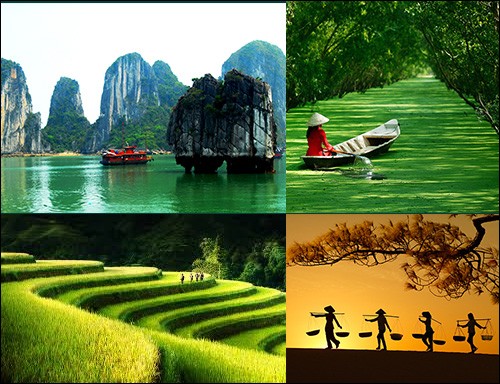
Vietnam the beautiful wonder of Asia

The countrymen call their motherland “The Land of Dragons.” Vietnam is a land of history filled with memory of many told and untold events. The great theme of modern Vietnamese history is the Vietnam’s war of Independence and reunification.
The Vietnam War was proved to be an extremely sobering experience which caused so much suffering for the Vietnamese people. The people of the country have a well-deserved reputation for being hard workers, but they enjoy their leisure as much as anyone else. Today the largely agrarian society of the country is shifting towards a more multi-sector economy. The country has a population of 91.5 million (estimates 2011) with a wealth of dialects spoken in different regions.
vn
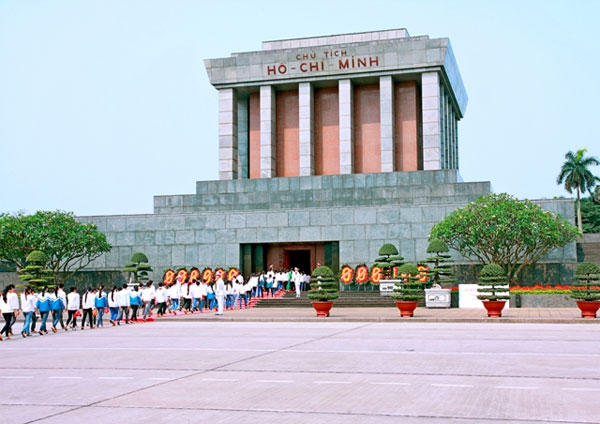
President Ho Chi Minh’s name comes to mind when we remember the recent history of Vietnam. He is the best-loved and famous political figure in the country. Ho Chi Minh the founder of the Vietnamese Communist Party and leader of the revolution carried the torch of Vietnam’s independence movement for over half a century. As a revolutionist he made great contribution to the victorious Viet Minh that unified the country. Mausoleum Ho Chi Minh a monumental marble edifice at Ba Dinh Square in Hanoi was built to show the deep gratitude of the countrymen to their great leader. His remains are displayed inside the chamber of the mausoleum.
Hanoi the capital city, known as “city of lakes” is one destination for which any number of praising words seems inadequate. It is a thriving metropolis with cloud-tickling skyscrapers, numerous specialty shops, boutiques and colorful markets that unhesitatingly leap into the future.
amitysmiletravel-hn12
                                                     Ho Chi Minh Mausoleum
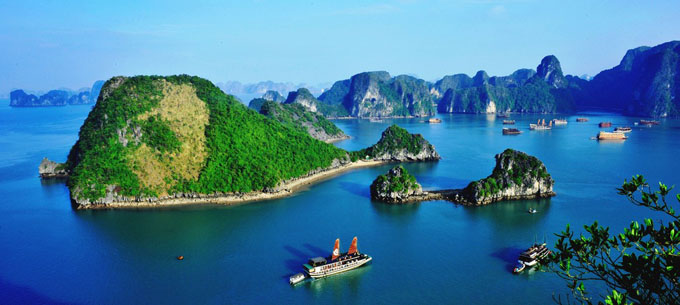
A visit to the country would remain incomplete if one doesn’t drive a 3½-hour journey on road from Hanoi to Halong Bay port. The five hour cruise in a double deck wooden boat on the bluish green waters, one can enjoy the beauty of the bay. The UNESCO world Heritage site Halong (or "Descending Dragon) Bay is situated amidst a splendid panorama. The bay covers an area of 1500-square-kilometres dotted with a cluster of 1960 lime stone islands.
amitysmiletravel-hl10
                                                                   Ha Long Bay 
Hue in the center of the country is studded with many archeological sites. There is no end to the breath-taking sites visitors can see in Hue. Among those sites, feudal capital city with fortresses, temples, mausoleums, pagodas, bridges attract thousands daily. The area also offers the tourist to enjoy the riverside beauty. The Perfume River is famed for breathtaking river cruise in a traditional wooden boat.
Traveling from North to South of Vietnam can be a fantastic experience for a tourist.
Ho Chi Minh City is the largest city in Vietnam and is situated nearly 1,700 kilometers south of Hanoi. After the end of war in 1975 the Saigon city was renamed Ho Chi Minh City in honor of this great Leader. It is a city with a rapid development, where modern buildings are rising besides the 19th century buildings. An array of giant cranes show the development fever in the city.
Among its highest-esteemed attractions are the Notre Dame Cathedral, Municipal Theater, the Re-unification palace, the Mekong River cruise, the Cu Chi tunnels and the Vietnam War Memorial Museum. The Vietnam War memorial museum is one of the most recognizable places to visit in the city. It is a living testimony to the history of the Vietnam’s war of independence and re-unification of North and South Vietnam. It is a place preserving the memories and relics of the Vietnam war.
Vietnam culture possesses several distinctive characteristics that give its own unique style. Today, the mixture of influences is apparent in art, music, dance and literature. Moreover, the fast growing tourism sector is another major pillar in the overall economic field of the country Vietnam is emerging as a strong tourist destination with number of visitors to the country climbing to 6.0 million in 2011.
Traveling to the country can be done in different ways. However the experience that a visitor gains is unforgettable. The country is home to a wide range of domestic and international airports. Hanoi’s Noi Bai Airport, Da Nang and Tan Son Nhat Airport of Ho Chi Minh City are the major stop over points for many international airlines. Vietnam has a great deal to offer and is worth visiting.

2016-01-19

Traditions of Tet, the Vietnamese New Year

An introduction to Tet, the Vietnamese New Year - Tet foods, flowers, fruits, celebrations and gatherings.

Vietnamese New Year is the most important Festival of the Vietnamese people. When Spring arrives, all Vietnamese are thrilled by the advent of Tet. Wherever they may be, they feel an immense nostalgia, wishing to come back to their homeland for a family reunion and a taste of the particular flavors of the Vietnamese festivities.


This scared Festival occurs sometime between late January or early February, depending on Lunar Calendar. Although officially a three-day affair, festivities may continue for a week or more with every effort made to indulge in eating, drinking, and enjoyable social activities. It is also a time for family reunions, and for paying respect to ancestors and the elders. Gifts of food are made to friends, neighbors and relatives in the days before Tet.

Vietnamese calligrapher creates traditional signs.Above all, the Tet of the New Year is a time for meeting. It is an opportunity for the household genies to meet, those who have helped during the year, namely the Craft Creator, the Land Genie and the Kitchen God. Tet is also an opportunity to invite and welcome deceased ancestors back for a family reunion with their descendants to join the family's Tet celebrations. Finally, Tet is a good opportunity for family members to meet. This custom has become sacred and secular and, therefore, no matter where they are or whatever the circumstances, family members find ways to come back to meet their loved ones, gather for a dinner of traditional foods like bánh chưng (a square cake made of sticky rice stuffed with beans and pork), mang (a soup of boiled bamboo shoots and flied pork) and xôi  (orange sticky rice). This is followed by a visit to the local pagodas.

Everyone is in a rush to get a haircut, buy new clothes, spruce up their homes, visit friends, settle outstanding debts, and stock up on traditional Tet delicacies. Businesses hang festive red banners which read "Chuc Mung Nam Moi" (Happy New Year) and city streets are festooned with colored lights. Stalls spring up all over town to sell mut (candied fruits and jams), traditional cakes, and fresh fruit and flowers. Certain markets sell nothing but cone-shaped kumquat bushes. Others sell flowering peach trees, symbols of life and good fortune which people bring into their homes to celebrate the coming of spring. As vendors pour into the City with peach trees strapped to their bicycles, the streets look like moving pink forests.

Fruits of Tet: "Mam Ngu Qua"

The "five-fruit tray" on the ancestral altar during the Tet Holidays symbolizes the admiration and gratitude of the Vietnamese to Heaven and Earth and their ancestors and demonstrates their aspiration for a life of plenty. The five fruits represent the quintessence hope that Heaven and Earth bless humans. It demonstrates a Vietnamese percept of life, "When taking fruit, you should think of the grower".

Flowers of Tet: Dao, Mai, Quat (the Peach, Apricot and Kumquat)

Spring flowers in bloom for Tet, Vietnamese New Year.Coming to Vietnam during the season of the Tet festival, the visitor is engulfed in an ocean of colorful flowers. Visiting flower shows, contemplating the buds and blooms, and purchasing blossoms represents one of the distinct Vietnamese cultural characteristics. The peach (in the North ) and the apricot blossoms (in the South) are symbols of the Vietnamese Tet. The warm pink of the peach could very well match the dry cold of the North, but the hot South seems to be flourishing in the riot of the yellow of the apricot. The mandarin is symbolic of good fortune; therefore people tend to choose the little plants with verdant leaves which are laden with large, orange fruit for a longer display.

Food Specialties for TET

On the last day of the old year, the preparation of food to offer to the ancestors is of special significance. Dishes to offer to the ancestors differ in the Northern, Central and Southern parts of the country, depending on their respective weather conditions at the time and on different local agricultural products available. What is common in all regions of the country during Tet holidays are the varieties of soups, fried, boiled, or stewed dishes, meat, fish, vegetable... The foods that the Vietnamese eat at Tet are varied and diverse, but the people throughout the country all want to have the best and the most beautiful looking food on this occasion to offer their ancestors and to treat their friends and guests.

The Giao Thua (New Year's Eve )

The Giao Thua is the most sacred point of time, the passage from the old to the new year. It is popularly believed that in Heaven there are twelve Highnesses in charge of monitoring and controlling the affairs on earth, each of them taking charge of one year. The giao thua is the moment of seeing off the old chieftain upon the conclusion of his term and welcoming in the new one upon his assumption of office. For this reason, every home makes offerings in the open air to pray for a good new year.

After the giao thua is the start of the New Year with many customs and practices, amusements and entertainment, all of a distinct Vietnamese folk culture. This is a holiday with a distinct traditional culture that is rich in national identity.

2016-01-16

Traditional flowers for Tet holiday in Vietnam


Tet holidays are the days of relaxation, happiness and joy. And similar to pine tree for Christmas holiday in the West, Vietnamese also use many kinds of flowers and plants to decorate their house in this special period. Some names can be listed out: Chrysanths, marigold, Mao Ga flower, paperwhite flower, lavender, to name a few. Some people nowadays even use orchid and rose, although this is not yet popular. And above all, there are 3 kinds of plants that can not be missing in Tet holidays: peach flower, ochna integerrima and marumi kumquat.
                              Flower market
The busy scene of flower market near Tet days can bring on both excitement and nostalgia
Peach flower and marumi kumquat are familiar in the North while South people prefer ochna itegerrima for Tet holidays. Another reason is the characteristics of the plants. While marumi kumquat and peach trees grow well in cold weather, ochna integerrima just can survive in tropical lands with lots of sunshine.
Watch our video: Tet's colours brighten up Northern Highland

People in 2 different parts of Vietnam have various explanations for this tradition. Northern people say that peach flowers blossom in spring – during Tet holidays while most other flowers still stay silent, symbolizing the strong vitality and a brave heart. Moreover, the pink colour of peach flowers shows the love and joy spread among people in this unique time of the year. Peach flower has 2 kinds: light peach with light pink colour and Nhat Tan – Ha Noi’s specialty peach with dark pink colour (nearly red).
                       Peach blossom for Vietnam Tet
                                                Peach flower - peaceful and elegant
Marumi kumquat bears different story. A tree with all 5 characteristics: full of fruits, flowers, leaves, branches and roots is a symbol for wealth and happiness for the new year. The tips for choosing a good plant are generated accordingly: the tree must have both ripe and green fruits, mature leaves and new bud - which represents wealth and luck brought to the family in the new year.
                                 Vietnamese Kumquat for Tet
                                                            Kumquat - lucky and fruitful
The ochna integerrima in the South has another meaning. The golden yellow of the flower means the noble roots of Vietnamese (folktales said that the ancestors of Vietnamese is a couple of dragon and fairy). In addition, the high rate of blossom of the flower in Tet holidays also symbolizes the wealth and passionate love among people.
                             Mai Flower
                                      Hoa mai (ochna integerrima) - bright and shining
Vietnamese usually buy those special plants from lunar mid-December from the flower market (some even try to have peach flower branches/trees from the mountains because of its impressive vitality) and keep them until lunar mid-January of the New Year. Some families keep the branches to the end of the lunar January.

2016-01-15

20 Fun & Interesting Facts about Vietnam

1. The official name of Vietnam is Socialist Republic of Vietnam

2. The country’s territory has a shape of a narrow “S” letter. It look lovely the shape as it’s a nice symbol and easy to remember

3. The people of Vietnam keep potbelly pigs as pets for their children

4. Traditional musicians play funeral music in funerals. It’s a hurtful farewell tune, played to escort souls to the other world.

5. The Capitol city of Vietnam is Hanoi

6. Nature tourist love to come to Vietnam because they have the world’s only six biosphere reserves available in very easy to get to locations around the country

7. Vietnamese avoid direct eye contact. If you look at somebody’s eyes for long enough moment, it implies that (1) you’re investigating or do not believe in what he or she is saying, or (2) threatening if you staring at him/her, or (3) have emotional affection with him/her.

8. The Vietnamese language is one of the hardest to learn with six different tones to perfect

9. Vietnam is one of the ten member states of the Association of Southeast Asian Nations (ASEAN)

10. Vietnam is considered to have the lowest unemployment rate of any third world country

11. Vietnam is longer than it is wide only 40km at the shorts width

12. During the Vietnam war the Vietnamese build tunnels to hide from the invading forces which are still able to see today some are so small at 5ft by 3ft wide

13. The major religion in Vietnam is Buddhism

14. As of 2012, according to the report, about 36 million people accounting for approximately 40% of all Vietnamese around the world share the same family name Nguyễn.

15. Ha Long Bay is one of the most popular tourist destinations in Asia with its natural limestone foundations and pillars along with about 2000 isolated islands some populated

16. Motor bikes are the main form of transportation for many people in Vietnam

17. Vietnamese food specialty is ruou ran (snake wine). This is basically rice wine with a pickled snake floating in it

18. 240 men were awarded the Medal of Honor during the Vietnam War

19. The longest river In Vietnam is called the RED

20. The French were the first western Country to make Vietnam a colony

More interesting about Vietnam at here

2016-01-14

10 Reasons To Fall In Love With Vietnam

Vietnam should be on the top of everyone's travel list. It's that simple. With its dramatic landscapes, fascinating history, epic food and pulsating energy, Vietnam will electrify all of your senses and seize you from all angles. Vietnam is at once crazy and serene, thrilling and relaxing.
There are endless reasons to hop on a flight to Hanoi or Ho Chi Minh City and travel down or up this amazing country by train, plane, bus or the preferred method of transport motorbike. If you need persuading, here are 10 reasons to fall head over heels in love with Vietnam:

1. The History

Vietnam’s history is one of its main draws for tourists. The country is filled with educational sites for visitors that documents the Vietnam war and other historic events. Start in Saigon and visit the emotion inducing war museum and imperial palace. You can see old war planes scattered around the city and visit the Cu Chi war tunnels to get an insider look at what the war was like for many soldiers. Scattered around the city are war monuments and in Hanoi, you can even visit the final resting place of Ho Chi Minh himself. Whether you like history or not, there is no doubt that you will learn a thing or two just by being in the country.

Vietnam's history is tumultuous and complex, the country having been occupied and divided by various countries for decades. Colonial influences are visible everywhere, from the architecture to the food and the coffee. The aftermath of the Vietnam War is apparent too -- in the museums and monuments but also in the faces and stories of survivors and the overwhelmingly young population. Interwoven with our own history, Vietnam's past is not only fascinating, it's also important to learn about.

2. The culture

The Vietnamese culture is very much still alive and well despite the bustling tourist industry. The street side food stalls and home-brewed beer in the bia hoi drinking spots can be found all around the cities and amongst the countryside. The countryside is still afloat with hardworking farmers, bison led equipment and modest homes which remind visitors of the backbone behind the flashy cities. The French occupation has also left its mark as well on the people and the towns. You can see the European architecture, the abundant café culture and see the locals meeting outside of them for traditional Vietnamese coffee and tea.

3. The people

Most clients travelling with Amity Smile Travel send feedback on their trip experience highlighting their deep impression of the friendliness and hospitality of Vietnamese people. According to travellers, Vietnam really has a precious treasure: its people. You are welcomed warmly by local people from North to South, whether or not you are familiar with them. Ethnic minority people in Sapa especially always consider you as a friend, even if you are on your first visit to their home with a local guide. People in Hue are royal-like in attitude but welcoming, while those in Hoi An are known as honest. Local farmers in the Mekong Delta always welcome you to their families with enthusiastic smiles.

4. Traditional festivals

Thanks to its long history, rich tradition and Buddhist influence, Vietnam has festivals organized all year round- many of which are unheard of in the West and really fun to learn about. Tet holiday, for example, is an ideal time to see how families celebrate their love for their ancestors and for each other. Tet should not be mistaken or called Chinese New Year, which may even be an insult to some nationalists. It resembles the Lunar New Year in many ways, but modified with a Vietnamese feel in it. For example, in the countryside, people stay over night and make chung cake- over a bit of fire and some end-of-year gossips. In Hai Phong, the buffalo fighting festival is a well-known occasion: the winning buffalo will get killed and presented to the village god. Even public holidays in Vietnam are worth joining: come to Vietnam on the 2nd of September and you will see nation-wide parades. The whole streets will be lighted by the red flags- and fireworks take over the sky at night. Check our events page to see what events you can join in your next trip.

5. Breathtaking landscape

If you opt to discover the hidden charm of Vietnam, you will be surprised by the intense beauty of some top-listed World Heritage Sites, namely Ha Long Bay, Phong Nha Ke Bang National Park, Hoi An Ancient Streets, and Cham Island. The 1600 islands and islets in Ha Long Bay form a spectacular seascape of limestone pillars. If you are a photographer or a nature lover, you will rack up piles of satisfying pictures of different subjects. Some of the non-heritage sites will astonish you even more. Dalat is picturesque with many French style villas; Sapa is misty and romantic just like a girl waking up in the morning; and Vietnam’s long coastline brings seemingly endless scenic sea views, leisurely and private sunbathing, or a simple stroll along the beach.

6. A large number of beautiful sandy beaches

Vietnam's beaches may be one of the country's most unsung beauties. While travelers may think of Thailand and Cambodia as the countries to visit for white sand and clear water, Vietnam boasts beaches that rival these countries' beloved tourists spots. Sure, some beach towns in Vietnam, like Nha Trang and Mui Ne, get a lot of attention, but quieter, less-traveled beaches like Doc Let are the real treasures. Con Dao and Phu Quoc are some of the most gorgeous islands in South East Asia, and travelers would be wise to hurry there now, before these isolated, idyllic spots suffer the same fate as the over-traveled beaches in Thailand and Cambodia.

You can find the right place for yourself, depending on whether you want something more secluded, where you can be alone with a significant other, or want to be in an urban environment, but have the ability to get down to the beach for a quick swim in a matter of minutes.

If you are looking for an exotic location, with lots of fun and worthwhile things to do, Vietnam is definitely the place to visit. Even if you don’t have a clear idea of what you want out of your vacation, there’s something for everyone in this proud country.

7. The activities

Besides the beautiful sites and cuisine, there is enough to do within Vietnam so you will never grow bored. Go trekking and shopping in traditional villages when you visit Sapa. Kayak, swim and tube in between beach lounging while in Ha Long Bay or trek deep into the cave system at Dong Hoi. Scuba diving, snorkelling and wind surfing are all viable options when you visit the beach towns of Nha Trang and Phu Quoc and canyoning and motorbike tours are popular with travellers in the highlands. Stick to the cities and listen to live music, see traditional dance and water puppet shows or take a cooking class and learn the language. There are endless activities for everyone’s different tastes.

8. The Affordability

There is almost a place for every budget if you travel to Vietnam. Many budget travellers choose Vietnam on their list of destinations. There are plenty of hostels and guest houses in most cities at prices below 30 US$/room/night. And even high end adventure travellers often enjoy experiencing the local street food, which is both delicious and cheaper than in many other countries. In fact, although Vietnam is suffering from high inflation, with prices rising monthly, it is still a more affordable destination than many other nations.

9. Tasty and exquisite cuisine

Vietnamese cuisine is popular all over the world so why not come taste it at its source. Women somehow whip up delicious meals out of the contents of a single bag on the side of the road and tiny street stalls fill the alleyways offering up papaya salads and the popular meat and noodle soup, Pho. Fried and fresh spring rolls are served up at the markets and the amount of delicious dipping sauces can make your head spin. Try the giant seafood filled pancakes, the grilled corn on the cob or the warm banana cake in a coconut milk sauce.

10. Markets

Markets in Vietnam may not be cavernous underground worlds of stunning rock formations and skyscraper high stalagmites, but they can be cavernous worlds unto themselves. Markets like this one in Danang sell everything from fabric for clothing to dried baby shrimp. Needless to say, you can get lost exploring the rows for hours. They're most active in the early morning and late evening, when the temperature cools down a bit and shoppers come out. During the middle of the day, you might find shopkeepers taking a nap in front of their stalls. When we say you could spend all day in these markets, we seriously mean it.