Showing posts with label vietnam. Show all posts

2016-01-26

8 Destinations in Vietnam You Should Go

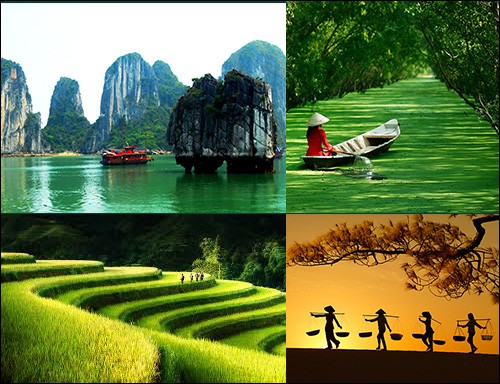
The Cu Chi Tunnel, Mekong Delta region, Phu Quoc, Hoi An, Nha Trang, Mui Ne and Sapa are seen as favourite destination for foreign tourists coming to Vietnam, according to the world’s travel search engine.
Cu Chi Tunnels
Cu Chi tunnels built in 1948 were used by Vietnam soldiers during the reistance struggles against French colonists and American imperialists. They are an immense network of connecting underground tunnels located in the Cu Chi district of HCM City.


Mekong Delta region
Floating market is the highlight of the Mekong Delta region. Visitors can experience diverse activities like rowing through mango forests, trekking, visiting fish and snake farms, and riding along tracks.


Sapa
Sa Pa is a town in the Hoang Lien Son Mountains of northwest Vietnam. Popular with trekkers, it overlooks the terraced rice fields of the Muong Hoa Valley, and is near the 3,143m-tall Fan Si Pan peak, climbable via a steep, multiday guided walk. H’mong, Tay and Dao hill tribes make up much of the local population.


Phu Quoc
Phu Quoc is the biggest island in Vietnam, which is famous for beautiful beaches. This peaceful tropical paradise, floats in the warm turquoise waters in the Gulf of Thailand, 50kms from the Vietnamese mainland and a 50 minute flight from Ho Chi Minh City 


Hoi An ancient city
Hoi An is recognised as a World Heritage Site by UNESCO. Hoi An Ancient Town is an exceptionally well-preserved example of a South-East Asian trading port dating from the 15th to the 19th century. Its buildings and its street plan reflect the influences, both indigenous and foreign, that have combined to produce this unique heritage site.


Mui Ne
With a long, palm-lined beach, Mui Ne has steady wind conditions (in the dry season) that make it a top destination for windsurfing, kitesurfing, sailing and other water sports. It’s also a popular weekend getaway from Saigon with a busy strip of hotels, restaurants and shops.


Nha Trang
Nha Trang is a coastal resort city in southern Vietnam known for its beaches, scuba diving and offshore islands. Its main beach is a long, curving stretch along Tran Phu Street backed by a promenade, hotels and seafood restaurants. Cable cars cross over to Hon Tre island and the Vinpearl Resort, with a golf course, water park and fairground.


Ha Long Bay
Ha Long Bay is a UNESCO World Heritage Site, and a popular travel destination in Quang Ninh province. It features thousands of limestone karstsand isles in various sizes and shapes.


2016-01-24

Vietnam the beautiful wonder of Asia

The countrymen call their motherland “The Land of Dragons.” Vietnam is a land of history filled with memory of many told and untold events. The great theme of modern Vietnamese history is the Vietnam’s war of Independence and reunification.
The Vietnam War was proved to be an extremely sobering experience which caused so much suffering for the Vietnamese people. The people of the country have a well-deserved reputation for being hard workers, but they enjoy their leisure as much as anyone else. Today the largely agrarian society of the country is shifting towards a more multi-sector economy. The country has a population of 91.5 million (estimates 2011) with a wealth of dialects spoken in different regions.
vn
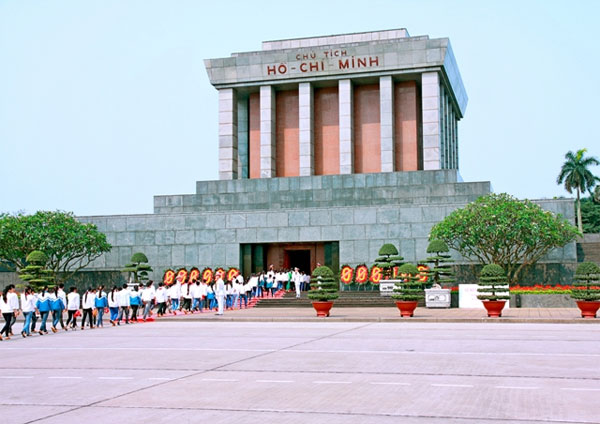
President Ho Chi Minh’s name comes to mind when we remember the recent history of Vietnam. He is the best-loved and famous political figure in the country. Ho Chi Minh the founder of the Vietnamese Communist Party and leader of the revolution carried the torch of Vietnam’s independence movement for over half a century. As a revolutionist he made great contribution to the victorious Viet Minh that unified the country. Mausoleum Ho Chi Minh a monumental marble edifice at Ba Dinh Square in Hanoi was built to show the deep gratitude of the countrymen to their great leader. His remains are displayed inside the chamber of the mausoleum.
Hanoi the capital city, known as “city of lakes” is one destination for which any number of praising words seems inadequate. It is a thriving metropolis with cloud-tickling skyscrapers, numerous specialty shops, boutiques and colorful markets that unhesitatingly leap into the future.
amitysmiletravel-hn12
                                                     Ho Chi Minh Mausoleum
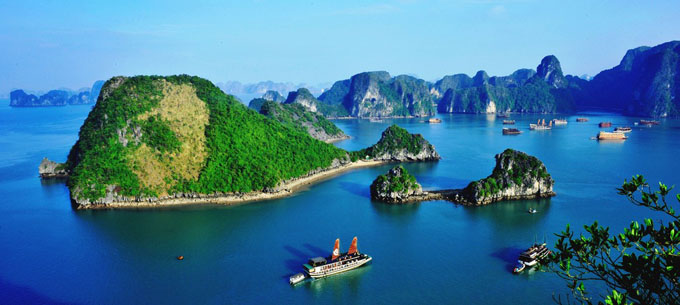
A visit to the country would remain incomplete if one doesn’t drive a 3½-hour journey on road from Hanoi to Halong Bay port. The five hour cruise in a double deck wooden boat on the bluish green waters, one can enjoy the beauty of the bay. The UNESCO world Heritage site Halong (or "Descending Dragon) Bay is situated amidst a splendid panorama. The bay covers an area of 1500-square-kilometres dotted with a cluster of 1960 lime stone islands.
amitysmiletravel-hl10
                                                                   Ha Long Bay 
Hue in the center of the country is studded with many archeological sites. There is no end to the breath-taking sites visitors can see in Hue. Among those sites, feudal capital city with fortresses, temples, mausoleums, pagodas, bridges attract thousands daily. The area also offers the tourist to enjoy the riverside beauty. The Perfume River is famed for breathtaking river cruise in a traditional wooden boat.
Traveling from North to South of Vietnam can be a fantastic experience for a tourist.
Ho Chi Minh City is the largest city in Vietnam and is situated nearly 1,700 kilometers south of Hanoi. After the end of war in 1975 the Saigon city was renamed Ho Chi Minh City in honor of this great Leader. It is a city with a rapid development, where modern buildings are rising besides the 19th century buildings. An array of giant cranes show the development fever in the city.
Among its highest-esteemed attractions are the Notre Dame Cathedral, Municipal Theater, the Re-unification palace, the Mekong River cruise, the Cu Chi tunnels and the Vietnam War Memorial Museum. The Vietnam War memorial museum is one of the most recognizable places to visit in the city. It is a living testimony to the history of the Vietnam’s war of independence and re-unification of North and South Vietnam. It is a place preserving the memories and relics of the Vietnam war.
Vietnam culture possesses several distinctive characteristics that give its own unique style. Today, the mixture of influences is apparent in art, music, dance and literature. Moreover, the fast growing tourism sector is another major pillar in the overall economic field of the country Vietnam is emerging as a strong tourist destination with number of visitors to the country climbing to 6.0 million in 2011.
Traveling to the country can be done in different ways. However the experience that a visitor gains is unforgettable. The country is home to a wide range of domestic and international airports. Hanoi’s Noi Bai Airport, Da Nang and Tan Son Nhat Airport of Ho Chi Minh City are the major stop over points for many international airlines. Vietnam has a great deal to offer and is worth visiting.

2016-01-15

20 Fun & Interesting Facts about Vietnam

1. The official name of Vietnam is Socialist Republic of Vietnam

2. The country’s territory has a shape of a narrow “S” letter. It look lovely the shape as it’s a nice symbol and easy to remember

3. The people of Vietnam keep potbelly pigs as pets for their children

4. Traditional musicians play funeral music in funerals. It’s a hurtful farewell tune, played to escort souls to the other world.

5. The Capitol city of Vietnam is Hanoi

6. Nature tourist love to come to Vietnam because they have the world’s only six biosphere reserves available in very easy to get to locations around the country

7. Vietnamese avoid direct eye contact. If you look at somebody’s eyes for long enough moment, it implies that (1) you’re investigating or do not believe in what he or she is saying, or (2) threatening if you staring at him/her, or (3) have emotional affection with him/her.

8. The Vietnamese language is one of the hardest to learn with six different tones to perfect

9. Vietnam is one of the ten member states of the Association of Southeast Asian Nations (ASEAN)

10. Vietnam is considered to have the lowest unemployment rate of any third world country

11. Vietnam is longer than it is wide only 40km at the shorts width

12. During the Vietnam war the Vietnamese build tunnels to hide from the invading forces which are still able to see today some are so small at 5ft by 3ft wide

13. The major religion in Vietnam is Buddhism

14. As of 2012, according to the report, about 36 million people accounting for approximately 40% of all Vietnamese around the world share the same family name Nguyễn.

15. Ha Long Bay is one of the most popular tourist destinations in Asia with its natural limestone foundations and pillars along with about 2000 isolated islands some populated

16. Motor bikes are the main form of transportation for many people in Vietnam

17. Vietnamese food specialty is ruou ran (snake wine). This is basically rice wine with a pickled snake floating in it

18. 240 men were awarded the Medal of Honor during the Vietnam War

19. The longest river In Vietnam is called the RED

20. The French were the first western Country to make Vietnam a colony

More interesting about Vietnam at here

2016-01-14

10 Reasons To Fall In Love With Vietnam

Vietnam should be on the top of everyone's travel list. It's that simple. With its dramatic landscapes, fascinating history, epic food and pulsating energy, Vietnam will electrify all of your senses and seize you from all angles. Vietnam is at once crazy and serene, thrilling and relaxing.
There are endless reasons to hop on a flight to Hanoi or Ho Chi Minh City and travel down or up this amazing country by train, plane, bus or the preferred method of transport motorbike. If you need persuading, here are 10 reasons to fall head over heels in love with Vietnam:

1. The History

Vietnam’s history is one of its main draws for tourists. The country is filled with educational sites for visitors that documents the Vietnam war and other historic events. Start in Saigon and visit the emotion inducing war museum and imperial palace. You can see old war planes scattered around the city and visit the Cu Chi war tunnels to get an insider look at what the war was like for many soldiers. Scattered around the city are war monuments and in Hanoi, you can even visit the final resting place of Ho Chi Minh himself. Whether you like history or not, there is no doubt that you will learn a thing or two just by being in the country.

Vietnam's history is tumultuous and complex, the country having been occupied and divided by various countries for decades. Colonial influences are visible everywhere, from the architecture to the food and the coffee. The aftermath of the Vietnam War is apparent too -- in the museums and monuments but also in the faces and stories of survivors and the overwhelmingly young population. Interwoven with our own history, Vietnam's past is not only fascinating, it's also important to learn about.

2. The culture

The Vietnamese culture is very much still alive and well despite the bustling tourist industry. The street side food stalls and home-brewed beer in the bia hoi drinking spots can be found all around the cities and amongst the countryside. The countryside is still afloat with hardworking farmers, bison led equipment and modest homes which remind visitors of the backbone behind the flashy cities. The French occupation has also left its mark as well on the people and the towns. You can see the European architecture, the abundant café culture and see the locals meeting outside of them for traditional Vietnamese coffee and tea.

3. The people

Most clients travelling with Amity Smile Travel send feedback on their trip experience highlighting their deep impression of the friendliness and hospitality of Vietnamese people. According to travellers, Vietnam really has a precious treasure: its people. You are welcomed warmly by local people from North to South, whether or not you are familiar with them. Ethnic minority people in Sapa especially always consider you as a friend, even if you are on your first visit to their home with a local guide. People in Hue are royal-like in attitude but welcoming, while those in Hoi An are known as honest. Local farmers in the Mekong Delta always welcome you to their families with enthusiastic smiles.

4. Traditional festivals

Thanks to its long history, rich tradition and Buddhist influence, Vietnam has festivals organized all year round- many of which are unheard of in the West and really fun to learn about. Tet holiday, for example, is an ideal time to see how families celebrate their love for their ancestors and for each other. Tet should not be mistaken or called Chinese New Year, which may even be an insult to some nationalists. It resembles the Lunar New Year in many ways, but modified with a Vietnamese feel in it. For example, in the countryside, people stay over night and make chung cake- over a bit of fire and some end-of-year gossips. In Hai Phong, the buffalo fighting festival is a well-known occasion: the winning buffalo will get killed and presented to the village god. Even public holidays in Vietnam are worth joining: come to Vietnam on the 2nd of September and you will see nation-wide parades. The whole streets will be lighted by the red flags- and fireworks take over the sky at night. Check our events page to see what events you can join in your next trip.

5. Breathtaking landscape

If you opt to discover the hidden charm of Vietnam, you will be surprised by the intense beauty of some top-listed World Heritage Sites, namely Ha Long Bay, Phong Nha Ke Bang National Park, Hoi An Ancient Streets, and Cham Island. The 1600 islands and islets in Ha Long Bay form a spectacular seascape of limestone pillars. If you are a photographer or a nature lover, you will rack up piles of satisfying pictures of different subjects. Some of the non-heritage sites will astonish you even more. Dalat is picturesque with many French style villas; Sapa is misty and romantic just like a girl waking up in the morning; and Vietnam’s long coastline brings seemingly endless scenic sea views, leisurely and private sunbathing, or a simple stroll along the beach.

6. A large number of beautiful sandy beaches

Vietnam's beaches may be one of the country's most unsung beauties. While travelers may think of Thailand and Cambodia as the countries to visit for white sand and clear water, Vietnam boasts beaches that rival these countries' beloved tourists spots. Sure, some beach towns in Vietnam, like Nha Trang and Mui Ne, get a lot of attention, but quieter, less-traveled beaches like Doc Let are the real treasures. Con Dao and Phu Quoc are some of the most gorgeous islands in South East Asia, and travelers would be wise to hurry there now, before these isolated, idyllic spots suffer the same fate as the over-traveled beaches in Thailand and Cambodia.

You can find the right place for yourself, depending on whether you want something more secluded, where you can be alone with a significant other, or want to be in an urban environment, but have the ability to get down to the beach for a quick swim in a matter of minutes.

If you are looking for an exotic location, with lots of fun and worthwhile things to do, Vietnam is definitely the place to visit. Even if you don’t have a clear idea of what you want out of your vacation, there’s something for everyone in this proud country.

7. The activities

Besides the beautiful sites and cuisine, there is enough to do within Vietnam so you will never grow bored. Go trekking and shopping in traditional villages when you visit Sapa. Kayak, swim and tube in between beach lounging while in Ha Long Bay or trek deep into the cave system at Dong Hoi. Scuba diving, snorkelling and wind surfing are all viable options when you visit the beach towns of Nha Trang and Phu Quoc and canyoning and motorbike tours are popular with travellers in the highlands. Stick to the cities and listen to live music, see traditional dance and water puppet shows or take a cooking class and learn the language. There are endless activities for everyone’s different tastes.

8. The Affordability

There is almost a place for every budget if you travel to Vietnam. Many budget travellers choose Vietnam on their list of destinations. There are plenty of hostels and guest houses in most cities at prices below 30 US$/room/night. And even high end adventure travellers often enjoy experiencing the local street food, which is both delicious and cheaper than in many other countries. In fact, although Vietnam is suffering from high inflation, with prices rising monthly, it is still a more affordable destination than many other nations.

9. Tasty and exquisite cuisine

Vietnamese cuisine is popular all over the world so why not come taste it at its source. Women somehow whip up delicious meals out of the contents of a single bag on the side of the road and tiny street stalls fill the alleyways offering up papaya salads and the popular meat and noodle soup, Pho. Fried and fresh spring rolls are served up at the markets and the amount of delicious dipping sauces can make your head spin. Try the giant seafood filled pancakes, the grilled corn on the cob or the warm banana cake in a coconut milk sauce.

10. Markets

Markets in Vietnam may not be cavernous underground worlds of stunning rock formations and skyscraper high stalagmites, but they can be cavernous worlds unto themselves. Markets like this one in Danang sell everything from fabric for clothing to dried baby shrimp. Needless to say, you can get lost exploring the rows for hours. They're most active in the early morning and late evening, when the temperature cools down a bit and shoppers come out. During the middle of the day, you might find shopkeepers taking a nap in front of their stalls. When we say you could spend all day in these markets, we seriously mean it.

2016-01-13

10 Things you should know before travelling to Viet Nam by yourself

1. The facilities are good, use them

Before I got to Vietnam I had visions of squat toilets all over the country, like that of many other South East Asian destinations and so steeled myself for having to ‘hover’ on a regular basis.

This turned out to be a misconception and the only squat toilet I encountered was at a service station at the side of the road. Apart from this, the plumbing tends to work in much a similar way to Greece: don’t block the pipes by flushing the toilet paper down; instead use the bin provided and everything will be fine.

As with anywhere in Asia, arm yourself with plenty of tissues and antibacterial gel in case you’re caught short with no supplies. You may also be charged to use toilets if they are situated at popular tourist sites. Don’t be cheap and think you can get away with paying the minimum price unless you are male and are used to using public urinals. I made this mistake and was shown to an exposed toilet bowl with no door that could be seen from the street!

2. It WILL rain – there’s no best time to visit Vietnam

If you are travelling from one end of the country to the other, it will rain at some point during your trip. The seasons vary throughout the country and I encountered rain in both Hoi An and Hue. Even though it was still warm, the rain was heavy at times, but don’t let it dampen your fun.

Ponchos can be bought for a minimal price when you are there (the thinner plastic ones are good just for walking around whereas you should invest in the thicker, longer ones if you’re planning on riding motorbikes and cycles a lot).

Also, don’t bother packing an umbrella – it just adds to your baggage weight and even the lowest class of hotels tend to offer them free in the rooms. Note –  Make sure you return the umbrellas before you leave as you will be charged for them otherwise.

3. The trains never run on time

Once you’ve spent a few days in Vietnam you’ll realise that the Vietnamese are a laid-back people, who are never in a rush to get anywhere. This translates to their public transport system also.

Having used a few sleeper trains during my stay, it became custom to never expect to arrive at your destination at the intended time, even if you had set off within an hour of your departure time. Just go with the flow and be ready and alert to leave the train at your station when you arrive because they don’t hang around for long and you never know where you might end up if you have to stay on the train until the next stop.

4. A Halong Bay cruise is a highlight – don’t miss it out


Although Halong Bay is often criticised as being quite touristy these days, it is still a beautiful place and needs to be experienced at least once. Invest in a good tour with a decent boat and you’ll be guaranteed a delicious lunch, too.

5. The traffic is crazy

There’s no getting away from it – you will have to brave the oncoming traffic in Vietnam at some point, but it really isn’t as bad as you would expect.

6. The Great Firewall of Vietnam

Despite being impressed by the availability and speed of the free WiFi in Vietnam, there was one problem that kept occurring – in many hotels and hostels Facebook is blocked by the internal servers, meaning that access is impossible.

When you’re travelling, Facebook is sometimes your only means of communication with other travellers you have met or are planning to meet, as well as keeping in touch with friends and family back home, and so this can be frustrating.

I also found that I couldn’t even access the Facebook app on my phone in these places. Try typing the address for the beta version of Facebook into the browser and this often solves the problem, but do make sure to ask the front desk about this access issue as well, as sometimes they may not even be aware of the problem.

7. Don’t always follow the guidebook recommendations

One night in Saigon we followed our trusted guidebook to a recommended bar that sounded right up our street. After we had spent half an hour walking around and having to ask a couple of locals, we actually managed to find the place, only to discover that it was the Vietnamese version of Hooters and was full of expat males (being the only female at the bar was a bit strange, to say the least).

Even my male companions were freaked out by the ambience of this bar and we drank our beers and quickly left. Don’t always trust the guidebooks – sometimes they become out of date as soon as they are published and sometimes they’re just plain wrong.

8. ‘Karaoke Massage’ ISN’T a beauty parlour with microphones

This may sound like an obvious one, but the naïve travellers among us may still fall into the trap of believing that these establishments are harmless and non-brothel-like. The word karaoke is used to attract tourists’ attention and to get them in, and then once you’re in….who knows??

9. Pho is pronounced ‘fur’ or ‘fuh’

The most mispronounced word by travellers is the country’s national dish of noodle soup.


I have heard it called “fo”, “po” and countless other variations, yet I was advised by a local that you need to be careful what it is you are asking for exactly when you pronounce this word. The word sounded as “fo” in Vietnamese actually means “lady of the night”, so you could end up getting much more than beef noodle soup!

10. Try all of the local beers

Each town in Vietnam has its own brand of beer which is brewed locally and is often cheaper than the country’s other beers (and cheaper than the imports).

It was great fun to try each of them and see what the label designs were like and how the taste differed (although after a few who can tell?). And you must try Bia Hoi at a streetside café in Hanoi….I know sitting in a child’s chair at the side of the kerb seems insane, but hey, you’re in Vietnam! Just go with it!

2016-01-12

Vietnam 54 Ethnic Groups

Vietnam is a tropical country situated in South East of Asia. It has 54 ethnic groups with about 86 million people (1999 census).  Living on the Indochina land - where it is a gateway in connection with Southeast Asia mainland with Southeast Asia islands, Vietnam is the mixture place of different cultures in the region.


Here, there are enough three big linguistics families in the Southeast Asia, the linguistics family of Southern islands and the Chinese-Tibeto linguistics family. Based on their languages, the ethnologists have divided the Vietnamese nation into eight groups as follows:

Viet-Muong Group: Chut, Kinh, Muong, Tho.
Tay-Thai Group: Bo Y, Giay, Lao, Lu, Nung, San Chay, Tay, Thai.
Mon-Khmer Group: Ba na, Brau, Bru Van kieu, Cho ro, Co, Co ho, Co tu, Gie trieng, Hre, Khang, Khmer, Kho mu, Ma, Mang, M'Nong, O du, Ro mam, Ta oi, Xinh mun, Xo dang, Xtieng.
Mong-Dao Group: Dao, Mong, Pa Then.
Kadai Group: Co Lao, La Chi, La ha, Pu Peo.
Austro-Polynenisian Group: Cham, Chu ru, E De, Gia rai, Ra glai.
Chinese Group: Hoa, Ngai, San Diu.
Tibeto-Burman Group: Cong, Ha Nhi, La Hu, Lo Lo, Phu La, Si La.

The Viet (Kinh) people account for 88% of the country's population and mainly inhabit the Red River delta, the central coastal delta, the Mekong delta and major cities. The other 53 ethnic minority groups, totalling over 8 million people, are scattered over mountain areas (covering two-thirds of the country's territory) spreading from the North to the South.

Among ethnic minorities, the most populated are Tay, Thai, Muong, Hoa, Khmer, Nung... with a population of around 1 million each, while the least populated are Brau, Ro Mam, O Du with several hundred people each.

Listed in alphabetical order:

1. Ba Na ethnic group
2. Bo Y ethnic group
3. Brau ethnic group
4. Bru Van Kieu ethnic group
5. Cham ethnic group
6. Cho Ro ethnic group
7. Chu Ru ethnic group
8. Chut ethnic group
9. Co ethnic group
10. Cong ethnic group
11. Co Ho ethnic group
12. Co Lao ethnic group
13. Co Tu ethnic group
14. Dao ethnic group
15. E De ethnic group
16. Giay ethnic group
17. Gia Rai ethnic group
18. Gie Trieng ethnic group
19. Ha Nhi ethnic group
20. Hoa ethnic group
21. Hre ethnic group
22. Khang ethnic group
23. Khmer ethnic group
24. KhMu ethnic group
25. Viet (Kinh) ethnic group
26. La Chi ethnic group
27. La Ha ethnic group
28. La Hu ethnic group
29. Lao ethnic group
30. Lo Lo ethnic group
31. Lu ethnic group
32. Ma ethnic group
33. Mang ethnic group
34. Mong (H'Mong) ethnic group
35. M'nong ethnic group
36. Muong ethnic group
37. Ngai ethnic group
38. Nung ethnic group
39. O Du ethnic group
40. Pa Then ethnic group
41. Phu La ethnic group
42. Pu Peo ethnic group
43. Ra Glai ethnic group
44. Ro Mam ethnic group
45. San Chay ethnic group
46. San Diu ethnic group
47. Si La ethnic group
48. Tay ethnic group
49. Ta Oi ethnic group
50. Thai ethnic group
51. Tho ethnic group
52. Xinh Mun ethnic group
53. Xo Dang ethnic group
54. Xtieng ethnic group

Who is to blame for disappointing Vietnam trips?

When your trip to Vietnam ends up as an unsatisfying and disappointing journey, should you blame the country for its troubled tourism, or yourself for lacking adequate planning while having too many unrealistic expectations?


Lani Nguyen argued in a piece recently published by Tuoi Tre News that travelers should blame themselves, provoking both for and against feedback from other readers.

Here are excerpts, edited for clarity purposes, from a few of the comments we have received.


MANUEL M.

I agree with the author about the rewarding experiences if you put more time and effort into your Vietnam trip.

I too have had the best experiences off the beaten track, and unlike many other visitors, I think Vietnam is still my favorite country in Southeast Asia. I'd gladly return any time with my experience.

But it can't be denied that in comparison with neighboring ASEAN countries, Vietnam has some grave issues in terms of scams and a lack of action on the part of tourism authorities.

Of course these issues need time to be resolved, but bear in mind that even Myanmar, which only opened itself a few years ago for mass tourism, already has a better reputation among tourists and backpackers.

CHUCK

The problem with tourism in Vietnam is not the tourist...

Yes, your first experience when you arrive at the airport are cheating taxis and bus drivers trying to scam as much money from tourists as possible. (Yeah that leaves a bad taste in your mouth.)

Ho Chi Minh City is full of tourist traps. But don't get me wrong – I love Vietnam, yet tourism is not one of its strengths.

You get everything, from meters not working on taxis to over the top pushy salespeople selling China’s low quality products (especially in Ben Thanh Market). If you are a tourist in the city, you pretty much have a big red bullseye on your back.

Vietnam is a welcoming country for the most part, but scams are one of the problems.

The others are that Vietnam is not a hub of technology and definitely not a place for luxuries.

Tourists visit the country to see and experience the history that does not get a terrible rendition of a top-tier luxury destination.

TUNG DANG

How about letting tourists walk safely through sidewalks without being run into by a bunch of mopeds?

It was nearly impossible to traverse the cities without mopeds running and honking behind you on the sidewalk as well as from all directions when crossing the street.

I could not even hold my wife's hand when walking.

And all of this occurs even though traffic cops are on every corner (Is that too hard to use traffic fine revenue to fix broken sidewalks?).

No wonder no tourist wants to come back, it is impossible to look at the scenery when you have to look in all directions just for safety.

Is it too hard to enforce traffic laws, educate locals on keeping order, or keep the streets clean?

If the country wants to improve tourism, just look at the environment in which these tourists have to go through first.

Clean that up and you'll have tourists give good ratings. Nevertheless, this may all be bad ideas for me, as I enjoy traveling when there're not too many tourists around.

JAKE

It is easy to blame the tourists, but it is impossible to change the tourists.

It is more useful to look at what can be changed inside Vietnam.

What really matters is that those same tourists will go to Thailand, Europe, Australia, and the Americas with the same mindset that they had in Vietnam and have a great time.

I think one of the biggest issues is the tour groups.

Vietnam's tourist industry is heavily geared towards putting people into tour groups and then trying to get as much money as they can from those groups without focusing on the quality of the tours.

There is a complete lack of innovation in the tour groups and no one seems to focus on quality.

The tour companies use the same techniques with foreigners as they do to Vietnamese, even though their cultural expectations about customer service and tourism are very different.

Ripping tourists off and trying to overcharge them for things are also a major issue that is not being adequately addressed.

When a tourist's very first experience with Vietnam is getting ripped off by a taxi driver at the airport, you can't expect that not to have an impact on their trip in Vietnam.

2016-01-11

12 hidden gems of Vietnam tourist attraction


Vietnam is the top destination in Asia tourist attraction. Popular tourist destinations include Hanoi, Sapa, the former imperial capital of Hué, the World Heritage Sites of Phong Nha-Kẻ Bàng National Park, Hội An and Mỹ Sơn, coastal regions such as Nha Trang, the caves of Hạ Long Bay and the Marble Mountains.

1, Hanoi
Hanoi can charm you so effortlessly with its poetic and romantic feel, especially in autumn. It must be the reason why there are so many beautiful songs and poems written about the capital. This city is a must-go destination if you want to discover Vietnam’s historic and cultural delights. Take time to enjoy the unique blend of colonial and pre-colonial architecture, historical and cultural museums, local shows, concerts and various temples and pagodas.


While in Hanoi, try to explore as much exotic local cuisine as possible but be sure not to miss the delicious and authentic Pho, which is every local’s staple dish. Also don’t miss the unique and surprisingly pleasant tasting “egg coffee” – one of the 10 best drinks in the world. After that feast of flavors, you are ready to engross in the fascinating maze of streets in the Old Quarter – the heart of Hanoi.
In the heart of the capital city of Hanoi the One Pillar Pagoda was built in 1049 to resemble one seen in Emperor LyThai Tong’s dream, this dream like Buddhist temple appears to float above a lotus pond. It is built of wood and stands on a small single pillar, the temple is designed to look like a lotus blossom and has ornate beautifully painted carvings. The One Pillar Pagoda we see today is a reconstruction of the original which was destroyed in war.

2, Halong bay
Halong within the still waters rise up out of the water 3000 island limestone formations in all manner of shapes and sizes. The water is often covered in mist giving it an eerie atmosphere. The Karst limestone formations can be seen by taking a cruise in a traditional wooden junk, you can also canoe or swim here. There are some beautiful caves in the small islands which are lit making the area even more mysterious.

3, Sapa
Sapa is one of the most breathtaking hill stations in Vietnam which reflects the signature of French architecture and colorful hill tribal cultures. This is home to stunning mountain landscapes, verdant rice terraces, unique stilt villages and Indochina peak, the Fansipan. Travellers are invited to enjoy the best of Sapa all the year round with different taste of seasons and exciting outdoors.

4, Hue
What makes Hue one of the best places to visit in Vietnam probably is its special look and feel. This ancient capital of Vietnam is the home of the emperor’s residence. The glorious time of Nguyen Dynasty is still impressively reflected today, in its culture, architecture and cuisine.
Hue is well known for delicate royal cuisines and the gentlest ladies in the country. Beautiful slim girls in traditional Ao dai riding bicycles along the Perfume river is the signature image of this city. If you are fascinated by historical and cultural discovery, the city is perfectly filled with palaces, royal tombs, pagodas and temples to explore and admire. And don’t leave Hue before you taste Bun bo Hue (beef noodle soup), Com la sen (rice with lotus seeds in lotus leaf) and various yummy rice cakes. Hue is famous in the country as the place that boasts the largest collection of various rice cakes. If you have some extra time to spare, explore an off the beaten track place not too far from Hue – Lang Co. It is a beautiful tranquil beach village.


Once the hub of the Nguyen Dynasty the tranquil collection of temples, ceremonial gates, streams, moats, pavilions, bridges, gardens and pagodas make this a beautiful site with plenty to see. The Thai Hoa Palaces and the Truong Sanh Residence are two of the most beautiful structures here as well as the ornate Thien Mu Pagoda isolated over the river. The beautiful city displays the essences of Vietnamese artistry.
The tombs are not far from Hue and are spread out along the banks of the Perfume River. It’s one of the most popular places to visit in Vietnam and I personally think the most beautiful of the tombs are Minh Mang, Khai Dinh, Tu Doc, Thieu Tri and Dong Kanh. The tombs were built according to religious outlines including symmetrically balanced geometrical angles and symbolic motifs. Each tomb has its own character with surrounding gardens, small bridges and walkways. In the Khai Dinh tomb you can see intricate ceramic and glass work and it is perhaps the most beautiful of the tombs.

This nature reserve is recognized by UNESCO and is the location of Son Dong, the largest cave in the world as well as another 300 caves and grottos. Within Son Dong is a 13 meter long underground river and beautiful stalactite and stalagmite formations. Other significant and beautiful caves in the park include Tien Son Cave, Thien Duong Cave and the Von cave system. The unusual and beautiful rock formations are due to the area being in a 2000km square limestone zone. Enjoy the tropical vegetation and evergreen forests with 500 year old trees.

6, Hoi An
Dating back over 2000 years, little alluring Hoi An is a dreamland for those who wish to have an ancient town experience. Walking around its atmospheric Old Town’s winding lanes is one of the best ways to immerse yourself in the blend of Cham, Chinese and Vietnamese architecture and culture.
Filled with charming shops, traditional wooden houses, flower garlands and lanterns, this town boasts an elegant beauty and was voted one of the best cities in the world. Many consider it to be Vietnam’s culinary capital for its famous Cao Lau, various tasty street foods and plenty of cooking courses.
Lavish forested hills, rice paddle fields and fishing villages are just a bit outside the town waiting for you to discover. Also, golden sandy beaches in Cua Dai, An Bang and China Beach are not to be missed while you are here in Hoi An

7, Nha Trang
This favorite spot of “sun and fun” seekers is located on one of the most beautiful bays in Asia. Adorned with lush islands, beautiful turquoise coastline and colorful coral reefs, Nha Trang is a great fun place for various water sports and outdoor activities.
Want to enjoy Nha Trang the local way? Sail to the ocean, catch fish, grill and enjoy them on board!
Here is a challenge for foodies, find the most special dish: Bo La (stewed beef in 5 spices over a sun dried egg served with Vietnamese baguette). It’s an amazing mix between French and local tastes. You can be very proud of yourself if you can have this delicious dish, not only because of the taste, but also because this rare dish is mostly unknown, even by the locals. A feast of fresh seafood cooked in spectacular local recipes is another must while you are here.
A bit further out from town, Cam Ranh Bay – one of the world’s finest deep-water harbors, is a hidden gem that is worth the 40 kilometers drive. And if you want to add a touch of romance to the trip, spend a night at Ninh Van Bay. It’s a golden sand paradise for honeymooners set along the bay with beautiful green hills.

8, Phu Quoc island
This tropical paradise is a perfect destination if you long for some peace and romance. Floating aimlessly in crystal clear lukewarm waters of the Gulf of Thailand is just the best way to calm your mind and ease your body. Walking barefoot on silk-soft white sands and emerald green waters or simply lying back in a hammock with a good book, are other great ways to immerse yourself in this beautiful and untouched marine environment.
PhuQuoc is as peaceful as it gets, and yet, this astonishing island is full of entertainment that will delight your adventurous side. Beach sports and water activities here are fantastic. Check out jet skiing, wind sailing, fishing, scuba diving and snorkeling. For more daring souls, don’t miss the chance to experience squid fishing. And when the night falls, the seafood night market is a must-go. Steamed wild fish and many local specialties found here definitely offer you a feast of heaven on earth.
Ladies, while here, check out the famous pearl farm. Properly adorned with the local accouterments, you will look so stunning after a wonderful trip to Phu Quoc.
The beautiful beaches of Vietnam deserve a place on this list. A few years ago Nha Trang was one of the most popular beaches in the country, but for a more pristine and tourist free beach try Phu Quoc Island. Apart from the dense inland forests the coast of Phu Quoc has long stretches of white sandy beaches and translucent water. The beauty continues under the water in the surrounding coral reefs. The 99 Peaks mountain range covered with unique plants, trees, waterfalls and inhabited by seldom seen indigenous animals are the best place to see the island from.

9, Saigon, Ho Chi Minh city
What makes Saigon so irresistible is its essential vitality. As the biggest commercial hub of Vietnam, Ho Chi Minh City has a special vibe that pulsates and refuses to rest. Thanks to its complex blend of different cultures, historical traits and Western influences, the city offers a mix of architecture, culture and street life that will at times fascinate and at other times thrill. While in Saigon, make sure you explore the Vietnamese coffee culture and experience the exciting nightlife, with plenty of street restaurants where you can have fruit, ice-cream, barbeque and hotpot, all late at night when the local Vietnamese finish their work and populate the lively streets.
In Ho Chi Minh City there are great opportunities to immerse yourself in the kitchens of Vietnam, with a wide range of cuisines that come from all over-the-country. Also, don’t miss the chance to enjoy the very affordable-luxuries you can’t find at home, such as romantic dining on a boat, healing therapy massage, a feast of fresh seafood, tailor-made suits and many other nice treats at surprisingly good prices.

10,Mekong Dalta
MekongDelta – the “Rice bowl of Vietnam” is a land of enchanting floating markets, lush green rice fields, bird sanctuaries, fascinating villages and endless fruit gardens. A typical one-day trip from Ho Chi Minh City is not merely enough for you to explore the most fertile region of the country. There is no place else in Vietnam where you can enjoy such an abundance of fruit, vegetables and river fish of all kinds. There is an endless list of treats to sample the local taste, but do your best to try the fish hotpot, grilled snails in black pepper sauce and the famous Ben Tre coconut.
If you have a chance to stay with a local family then don’t be surprised (and shouldn't refuse) when the host just gets everything they can find in the house (or in the market) to treat you to a proper feast. Warm and sincere hospitality is the core nature of Mekong people. Pamper yourself with cruising the delta at dusk, dining with grilled fish and enjoying a refreshing beverage while watching the sunset - it’s about as good as it gets.
The fertile land around the delta has allowed plant life to run wild, apart from the agricultural opportunities the delta offers untouched nature reserves. Explore the river life of floating markets and small villages as well as the islands close to the delta mouth. The beautiful landscape includes rice paddies, small rivulets and water channels meandering through the countryside towards the sea.

11, Street foods
  A collection of the best and most delicious recipes from the streets of Vietnam. Stepping onto the streets of Vietnam is like entering a big, bustling kitchen - everywhere, something is being rolled, boiled, steamed, or fried; pots of hot, fragrant pho sit over coal burners and balls of peanut-studded sticky rice are steamed and wrapped in newspaper. The food is fast, fresh, fragrant, and second to none in terms of its diversity and availability. Vietnamese Street Food represents everything enticing there is to eat on the streets of Vietnam. It contains more than sixty well-loved and authentic recipes from Prawn and Rice Paper Rolls to Crab Wontons, from Classic Noodle Soup with Chicken to Salt and Pepper Squid, and Crunchy Baguettes Filled with Skewers of Lemongrass Beef. Alongside these recipes are the stories of people who run some of the most legendary street stalls, providing a glimpse into their lives and daily routines. The variety of dishes and cooking methods, be it rolled, boiled, steamed, or fried, combined with gorgeous photographs of every dishful will have you creating unpretentious, fresh, and flavorsome food for any occasion.

12, Nigh market
When coming to a certain region of Vietnam, you will surely want to visit the night markets, the most prominent landmarks where culture and food exchange... of those areas. Some night markets that can not be ignored in all parts of the country such as: Night Market in Old Quarter in Hanoi, Hoi An Night Market in Quang Nam, Nha Trang night market, Ben Thanh night market in Ho Chi Minh...